
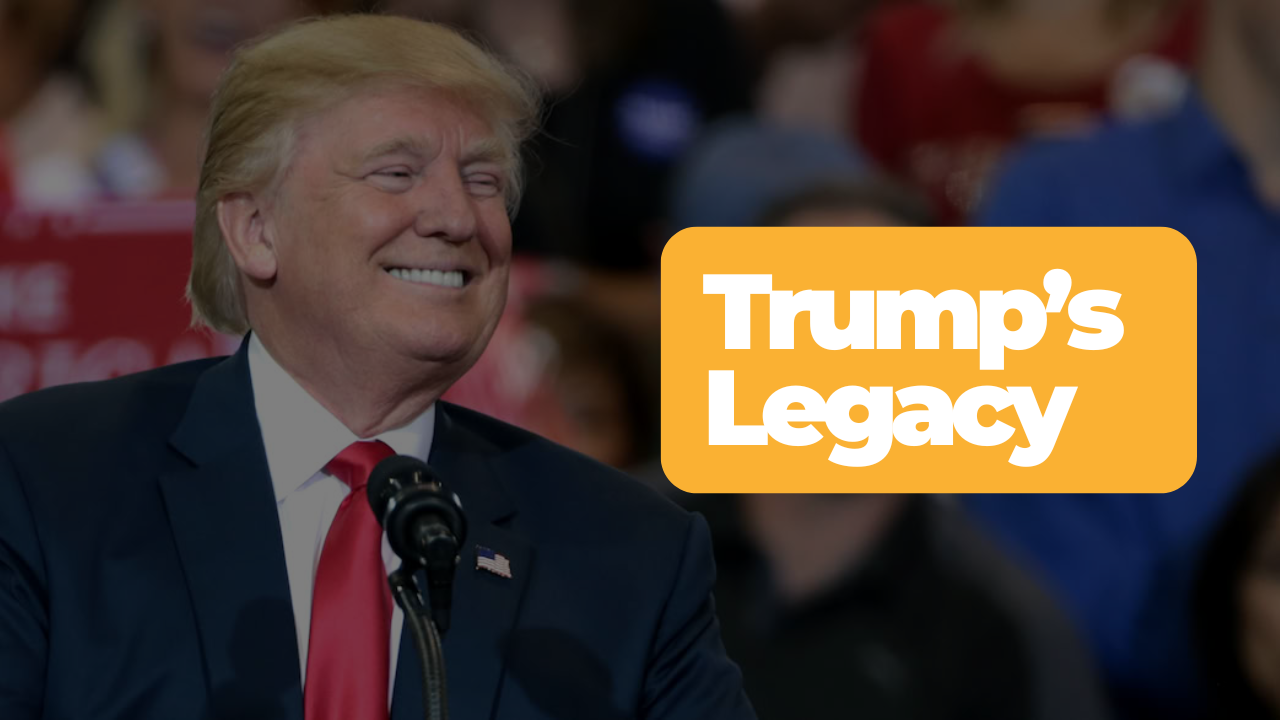
A Theory About Motivation, History, and What Comes After Everything
Let’s See If I’m Right
The conventional wisdom about Donald Trump’s second presidency runs something like this: he’s a tyrant-in-waiting, interested only in enriching himself and his billionaire friends, driven by grievance and ego, destined to loot whatever he can before the curtain falls.
I don’t believe that. And I’d like to make a case, based not on sympathy or political alignment, but on observable patterns, explicit statements, and the basic psychology of achievement, that Trump’s second term represents something fundamentally different from what critics expect. I think we’re witnessing a legacy presidency, the final project of a builder who has already conquered every other arena and now seeks historical significance on the grandest stage available.
This is a theory. It could be wrong. But if the evidence supports it, if Trump’s actions in Venezuela, his peace efforts in Ukraine and the Middle East, and his approach to international development align with this framework, then we may need to radically revise our expectations about what this presidency will actually produce.
Let’s examine the case.
The Psychology of the Final Act
Donald Trump is 79 years old. He has been a billionaire real estate developer, a household-name celebrity, a bestselling author, and a reality television star. He has plastered his name on buildings across the world. He has been president of the United States once already. He cannot run for office again.
What’s left?
For someone who has spent six decades building things and putting his name on them, the answer seems obvious: he wants to build something that outlasts the buildings. He wants a historical legacy that transcends gold-plated penthouses and reality TV catchphrases. He wants to be remembered not just as “that guy from The Apprentice” or “the controversial president,” but as someone who fundamentally changed the world for the better.
This isn’t speculation dressed up as analysis. Trump has said it explicitly. In his second inaugural address, he declared “My proudest legacy will be that of a peacemaker and unifier” and stated he wanted to be judged by “the wars that we end” and “the wars we never get into”.
When you’re 79 years old, have accomplished everything capitalism rewards, and can never hold power again, what motivates you? Not money – Trump already has more than he could spend. Not fame – he’s been globally famous for forty years. Not power for its own sake – this is definitionally his last term.
What remains is how history remembers you. And history, as Trump surely knows, judges presidents primarily by two metrics: whether they prevented catastrophic wars, and whether they improved the lives of millions of people beyond American borders. Presidents remembered as “great” are peacemakers and nation-builders. Presidents remembered as failures are warmongers and opportunists.
Trump, the consummate brander who understands image better than perhaps any politician in modern history, surely grasps this calculation.
“My proudest legacy will be that of a peacemaker and unifier”
Donald J. Trump
The Evidence: Nobel Dreams and Peace Deals
If you think the legacy theory sounds too generous, consider the actual evidence of Trump’s behavior and stated goals.
Trump and his aides have intensified a public campaign to win the Nobel Peace Prize, citing peace deals while making a case that snubbing him would be an injustice. He has posted about it repeatedly. His press secretary brings it up in briefings. This is not subtle.
More importantly, Trump’s substantive diplomatic initiatives support the theory. The Abraham Accords, whatever their limitations, represented a genuine breakthrough in Middle Eastern diplomacy. The agreements led to peace agreements between Israel and the United Arab Emirates, Bahrain, and Morocco, normalizing relations between countries that had maintained hostility for decades. Yes, the deals had significant gaps. Yes, they sidelined Palestinian concerns. But they were also the first Arab-Israeli normalization agreements in over 25 years and created frameworks for economic cooperation that persist today.
Trump’s approach to North Korea, though ultimately unsuccessful in achieving denuclearization, was genuinely unprecedented. The Singapore summit in June 2018 made history, as Kim Jong Un became the first North Korean leader to meet a sitting U.S. president—a feat neither his father nor his grandfather achieved. The meetings didn’t produce the desired outcome, but they represented a willingness to pursue diplomatic breakthroughs that previous administrations had deemed impossible or beneath presidential dignity.
Currently, Trump is pursuing an ambitious peace framework for Ukraine. Trump said teams are “getting a lot closer, maybe very close” to achieving a Ukraine-Russia peace deal, following his conversation with Putin and meeting with Zelenskyy. Negotiations have intensified over the past month and discussions are far more advanced than at any previous point in the war. Whether these efforts succeed remains uncertain, but the pattern is clear: Trump is personally invested in being the president who ends major conflicts.
This is not the behavior of someone focused primarily on personal enrichment or serving oligarchs. This is the behavior of someone chasing historical significance.
The Builder’s Instinct: Development Over Extraction
Perhaps the most telling aspect of Trump’s approach to international intervention is his consistent emphasis on building and development rather than pure resource extraction. Critics dismiss this as naive or as cover for exploitation, but the pattern is remarkably consistent across contexts.
Consider his bizarre but revealing comments about North Korea’s beaches. Trump told Kim Jong Un about North Korea’s “great beaches” saying “Wouldn’t that make a great condo behind?” and explained he could “have the best hotels in the world right there”. On the surface, this sounds absurd, pitching beachfront condos to a nuclear-armed dictator. But it reveals something fundamental about how Trump thinks: he sees underdeveloped places and imagines what they could become. He thinks in terms of construction, investment, and transformation.
The same instinct appears in his Gaza proposals. His Gaza plan includes convening experts “who have helped birth some of the thriving modern miracle cities in the Middle East” to create development that provides “jobs, opportunity, and hope.” Again, critics mock this as inappropriate or colonial. But what it demonstrates is a genuine belief that prosperity comes through development, not extraction, that building infrastructure and creating economic opportunities is the path to stability.
This is entirely consistent with Trump’s pre-political career. Trump has said “I have two jobs” and admitted he gets “great relaxation out of fixing the White House and fixing the Kennedy Center”. Even at a recent rally in North Carolina, Trump described himself as having strong opinions about the shape of the arms on chairs he put in his hotels, saying “I am a very aesthetic person”. Trump is fundamentally a builder who thinks about design, aesthetics, and physical transformation.
Applied to geopolitics, this instinct suggests something important: Trump likely does want to see Venezuela succeed, not just to extract its oil wealth, but because success would be his monument. A rebuilt, prosperous Venezuela with Trump’s involvement credited in its resurrection would be worth far more to his legacy than any percentage of oil revenues.
The “America First” Calculation: Aligned Interests, Not Zero-Sum
Critics will object: “But Trump is transactional! He only cares about American interests! This is all about extracting resources!”
Let me be clear: I absolutely believe Trump operates from an “America First” framework. He will prioritize American economic and strategic interests. He will take whatever is “reasonable” from Venezuela’s oil industry. He is not a selfless humanitarian.
But here’s the key insight: in 2026, American interests and Venezuelan recovery are not in conflict. They’re aligned.
America benefits most from a stable, prosperous Venezuela that can pump oil reliably, maintain regional stability, and serve as a functional trade partner. America does not benefit from a failed state that produces refugee crises, empowers hostile powers like China and Russia, or requires perpetual military occupation. The optimal outcome for American interests is Venezuelan success.
Similarly, Trump’s personal legacy interests align perfectly with Venezuelan recovery. A Venezuela that descends into chaos, poverty, or insurgency under American supervision would be a catastrophic stain on Trump’s historical record. But a Venezuela that rebuilds, stabilizes, and eventually prospers, even if imperfectly, would be a genuine foreign policy triumph that historians could not ignore.
This is not naive idealism. It’s cold calculation that enlightened self-interest can produce genuinely beneficial outcomes. Trump can pursue American advantages and Venezuelan development simultaneously because, in this case, they point in the same direction.
The Builder’s Final Project
During his tumultuous business career, Donald Trump retained the public appearance of high-flying success. He built an empire on branding, turning his name into a symbol of luxury and success regardless of the underlying business fundamentals. He understands, better than perhaps any modern political figure, that perception shapes reality and that legacy is the ultimate brand.
Now, in his final act, with no more elections to win and no more towers to build, Trump faces a simpler question: how does he want to be remembered?
The answer, I believe, is visible in his actions: as the president who prevented World War III, who brokered peace in Ukraine, who rebuilt Venezuela, who turned conflict zones into development opportunities, who used American power not for endless wars but for transformation and construction.
This would be consistent with everything we know about Trump’s psychology. He is a builder. He is obsessed with legacy. He craves recognition and historical vindication. He understands that great presidents are peacemakers, not warmongers. He knows that his reputation among elites depends on being seen as someone who made the world tangibly better, not just someone who enriched himself.
The Test: What Would Prove This Theory Wrong?
Good theories must be falsifiable. So what evidence would contradict the legacy hypothesis?
If Trump’s Venezuela policy results in pure resource extraction with no investment in infrastructure, institutions, or Venezuelan welfare, the theory is wrong. If American companies capture oil revenues while Venezuelan living standards remain catastrophic, the theory is wrong. If Trump abandons Ukraine peace negotiations when they become difficult, the theory is wrong. If he pursues policies that obviously maximize short-term American advantage at the expense of long-term stability and development, the theory is wrong.
Conversely, what would support it?
If Venezuela receives massive infrastructure investment aimed at rebuilding institutions and improving lives beyond just oil production, the theory gains credibility. If peace deals in Ukraine include genuine security guarantees and reconstruction frameworks rather than simply Russian territorial gains, the theory gains credibility. If Trump personally invests time and political capital in ensuring transitions succeed even when they’re politically costly at home, the theory gains credibility.
We’ll know within a year or two whether this framework accurately predicts Trump’s second-term foreign policy.
Why This Matters Beyond Trump
Understanding Trump’s motivations matters not because Trump himself is uniquely important, but because it forces us to think more clearly about how political change actually happens.
The standard progressive critique of Trump, that he’s a narcissistic authoritarian interested only in personal gain, may be emotionally satisfying, but it’s analytically useless if it prevents us from understanding what he’s actually likely to do. If Trump’s primary motivation in his second term really is legacy-building, then we should expect dramatically different policies than if his motivation were pure extraction and self-enrichment.
More broadly, the case of Venezuela illustrates a difficult truth that ideologically rigid thinking often misses: sometimes change comes from unexpected sources with mixed motivations, and we have to evaluate outcomes based on results rather than the purity of intentions.
If Trump’s Venezuela intervention succeeds in improving millions of lives, does it matter that his motivation included personal legacy concerns? If his peace efforts end the Ukraine war and save tens of thousands of lives, does it matter that he also wanted a Nobel Prize? If his development instincts lead to genuine investment in rebuilding failed states, does it matter that he personally profits from the associated business deals?
I would argue: not much. Perfect should not be the enemy of good, and good should not be rejected because it comes from complicated people with mixed motives.
Conclusion: Let’s Watch What Actually Happens
This is a theory about Donald Trump’s motivations in his second term. It could be wrong. Trump could revert to pure self-interest, abandon difficult peace negotiations when they become inconvenient, exploit Venezuela’s resources without meaningful investment in its people, and prove every critic right about his character and intentions.
But I don’t think that’s what we’re going to see.
I think we’re watching the final project of a builder who has run out of buildings to construct and now wants to build something more lasting: a historical legacy as a peacemaker and developer who transformed conflict zones into prosperous regions. I think his ego, his brand obsession, and his builder’s instinct all point toward genuinely attempting to make these interventions succeed, because failure would be the ultimate stain on his reputation while success would be the ultimate vindication.
The evidence supports this: his explicit statements about legacy and being a peacemaker, his Nobel Prize campaign, his development-oriented thinking about international conflicts, his personal investment in peace negotiations, and his track record of pursuing diplomatic breakthroughs that previous administrations considered impossible.
We’ll know soon enough if I’m right. Venezuela will either rebuild or collapse under American oversight. Ukraine will either reach a stable peace or descend into frozen conflict. Trump’s final years will either demonstrate a president focused on historical achievement or one focused on personal enrichment.
But I’m betting on legacy. I’m betting on the builder’s instinct. I’m betting that at 79 years old, with nothing left to prove in business or television or even politics, Donald Trump wants to be remembered as the president who built peace where others saw only permanent war.
And if I’m right, that’s very good news for Venezuela, and for a world exhausted by endless conflict.
Time will tell. Let’s watch what actually happens.
Author’s Note: This article represents a theory about political motivation that may prove incorrect. Readers are encouraged to evaluate Trump’s second-term foreign policy decisions against this framework and form their own conclusions about whether actions align with stated intentions. The test of any theory is not whether it sounds plausible, but whether it accurately predicts future behavior.